Sheldon.studio srl
Via dei Portici, 70
39100 - Bozen-Bolzano, IT
PI 03061940213
School courtyards are places where children play, connect with nature and learn to share space. Yet they are often underused, despite being among the few green spaces available in urban neighbourhoods.
Since 2015, Architettura Senza Frontiere Piemonte has worked with schools around Turin to rethink these spaces with their communities.
The challenge was not simply to redesign a courtyard, but to understand what it meant to the people who use it: how can we design a shared space without assuming we already know what people want?
Together with Architettura Senza Frontiere Piemonte, we used participatory design to involve children, parents, teachers and school staff in imagining new possibilities for their courtyards.
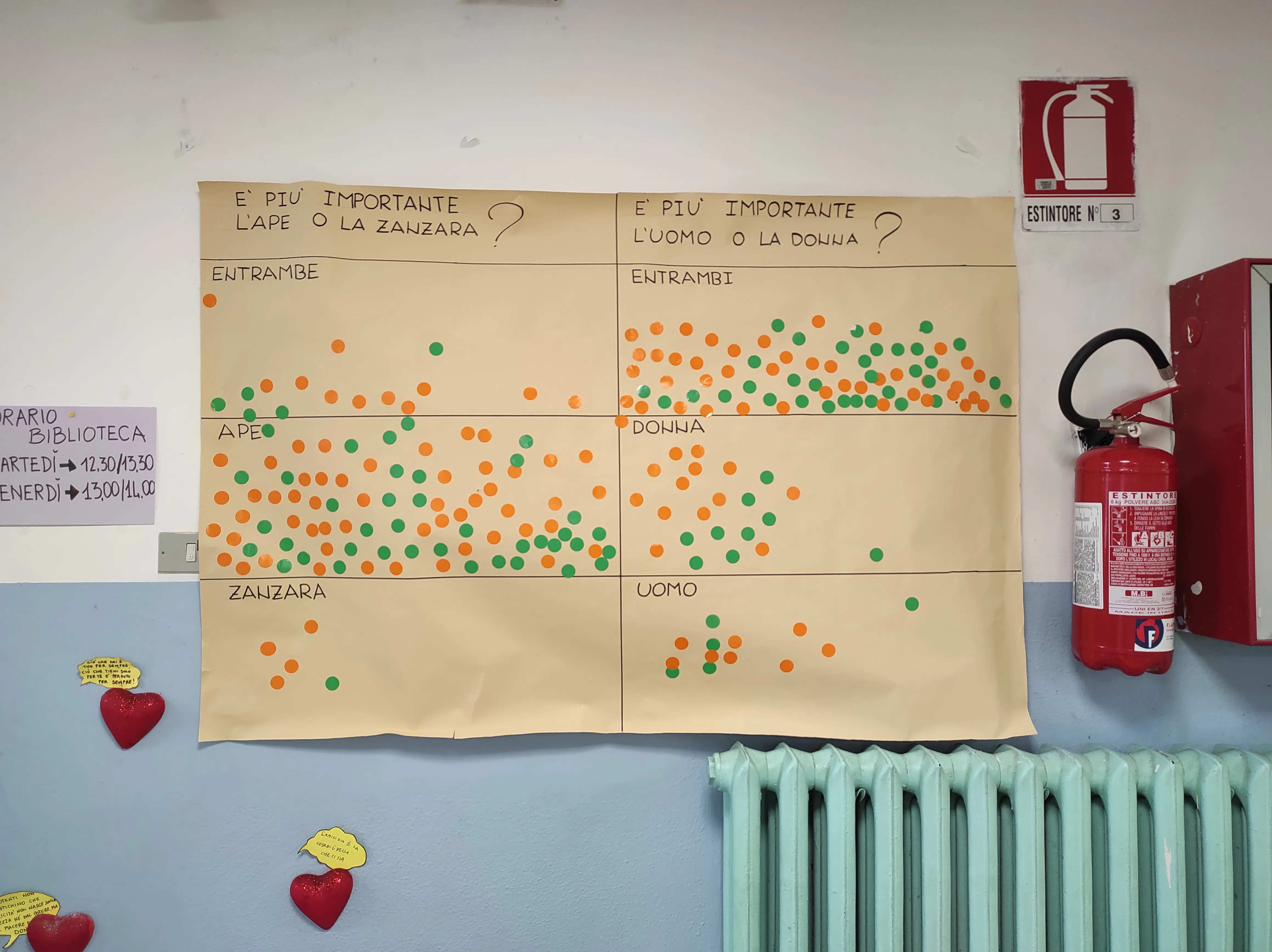
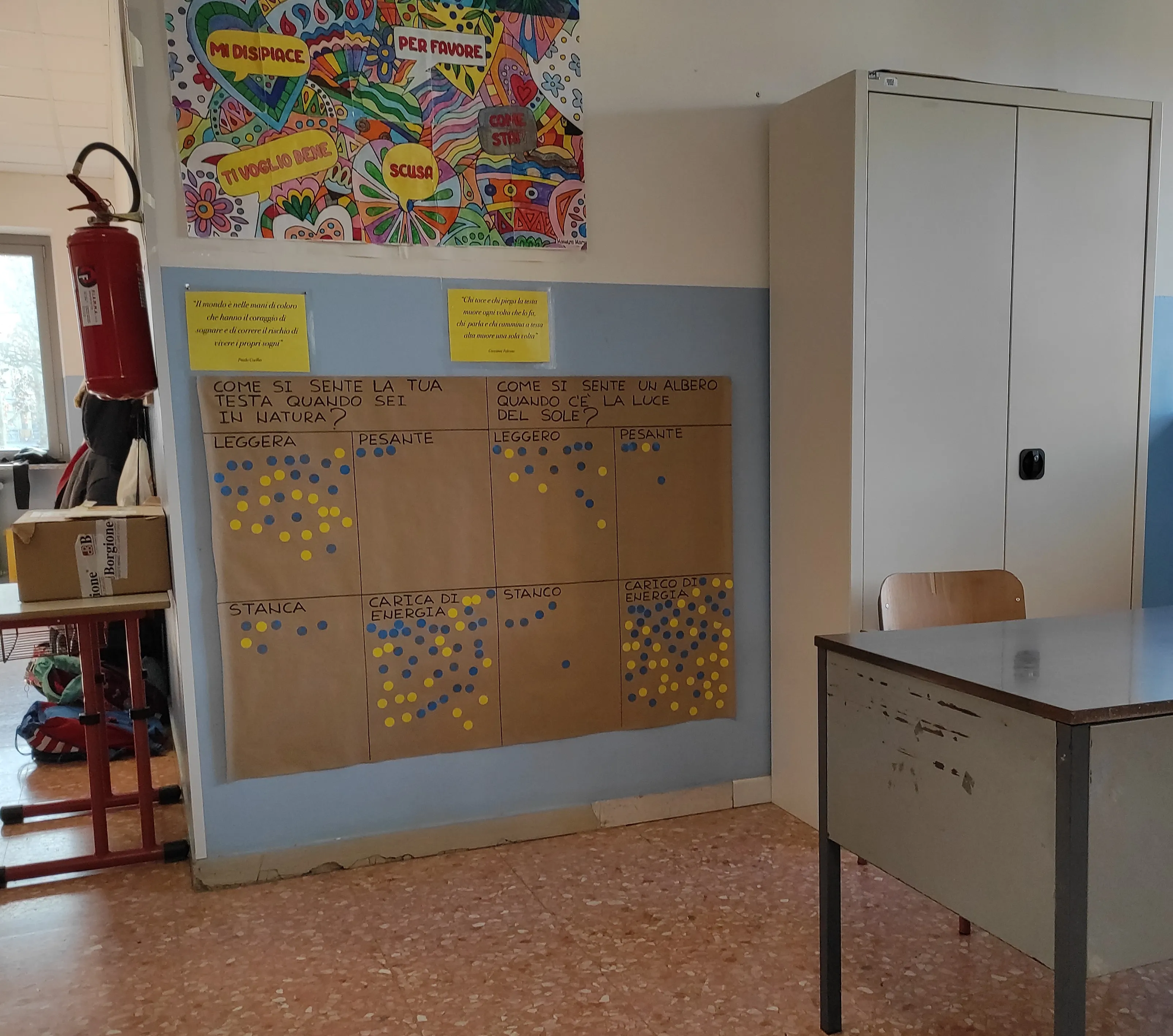
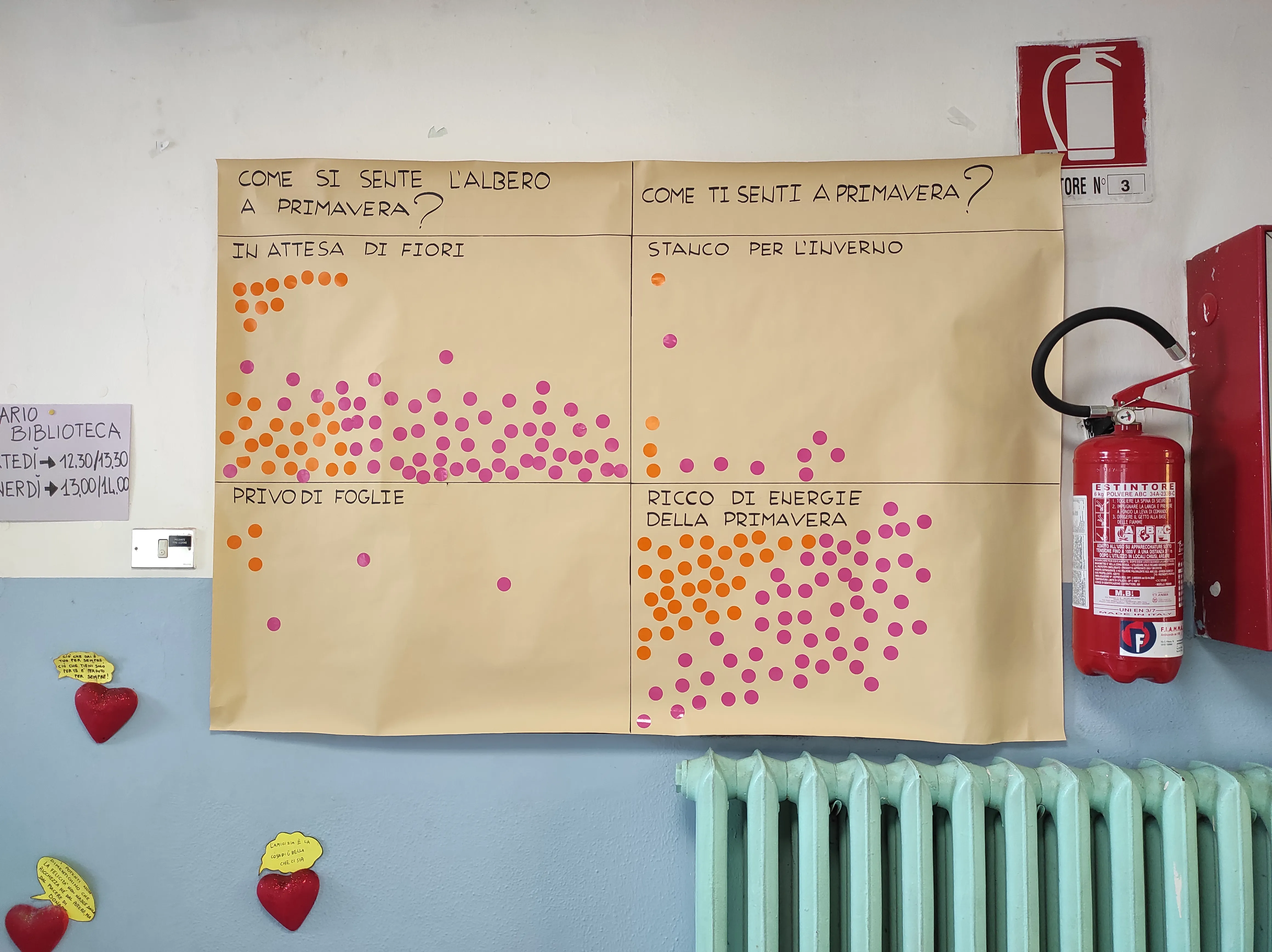
Through Participatory Data Physicalization, people could express their experiences through physical actions while contributing to a shared representation.
Instead of collecting opinions and visualizing them later, participation itself became a visible, collective experience.
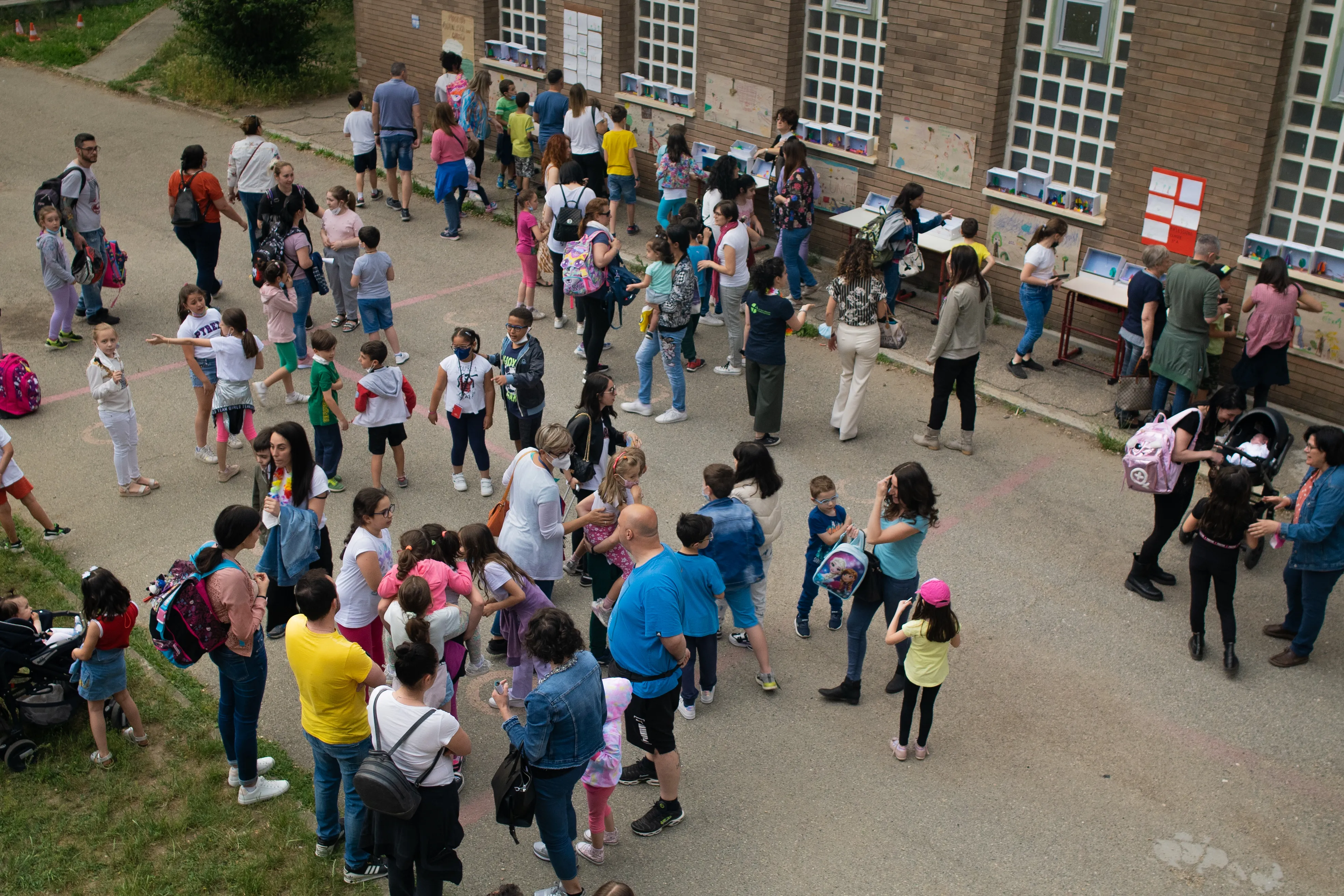
More than 500 people took part in activities around the transformation of the Sangone and Disney school courtyards in Nichelino.
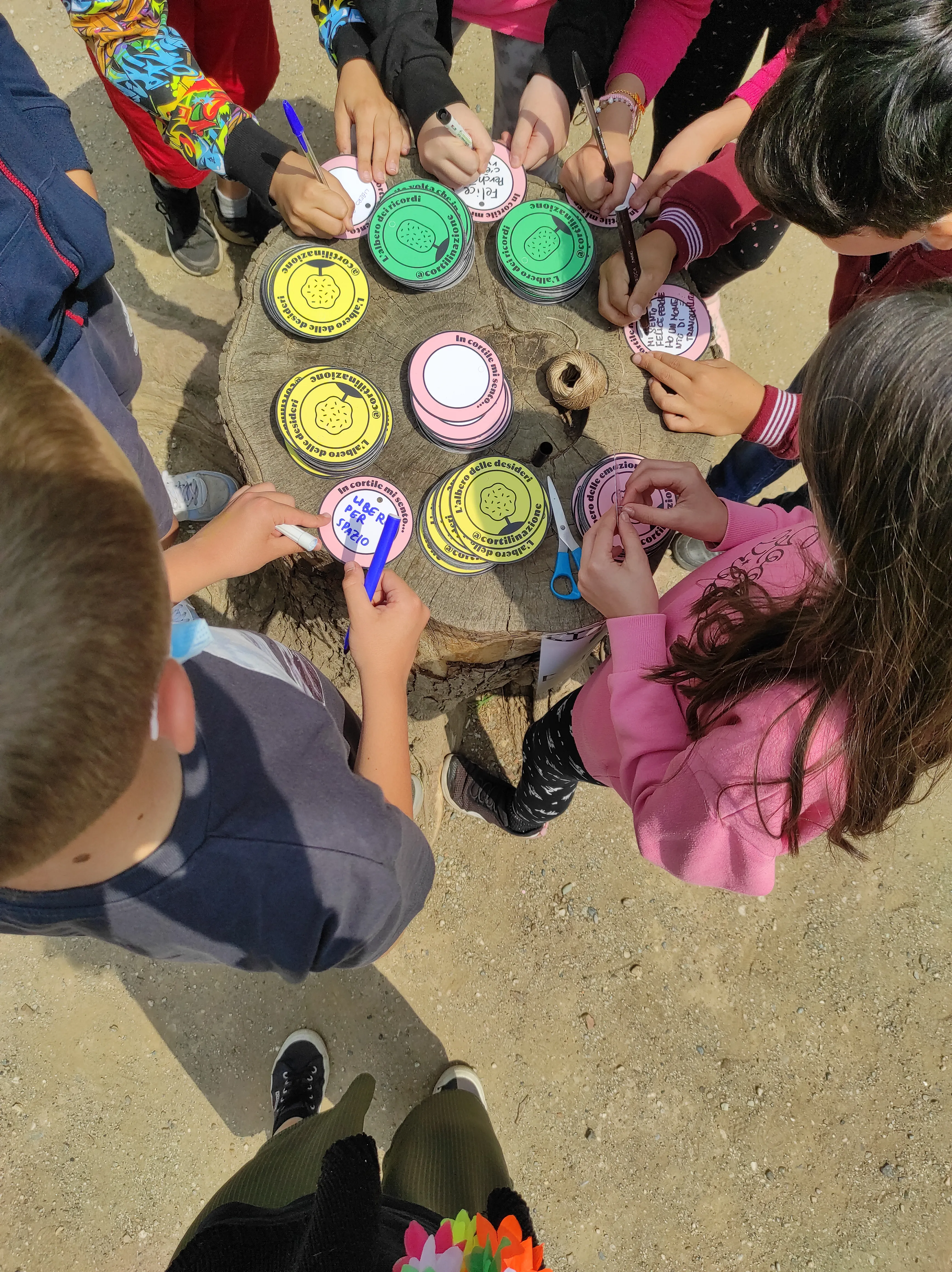
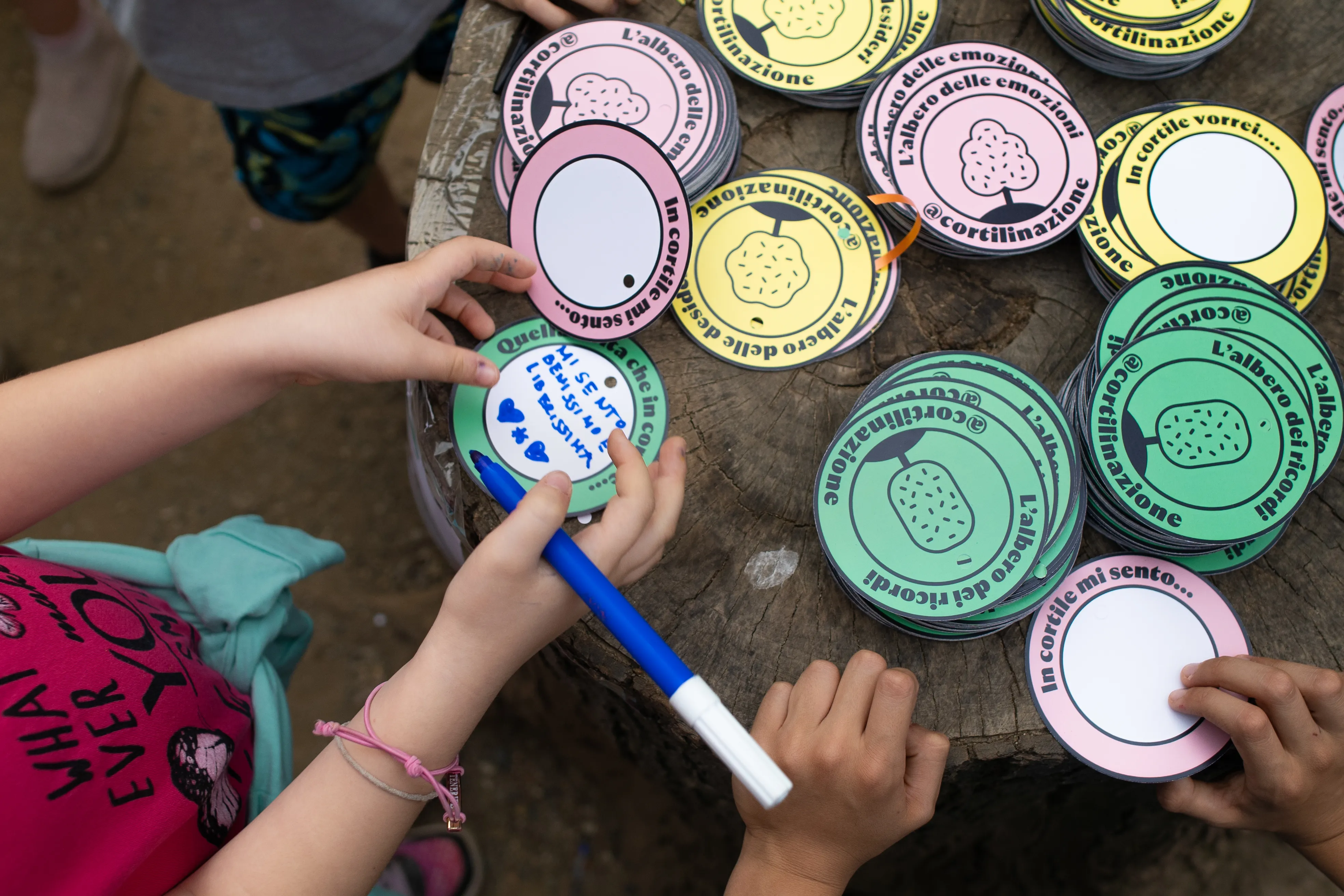
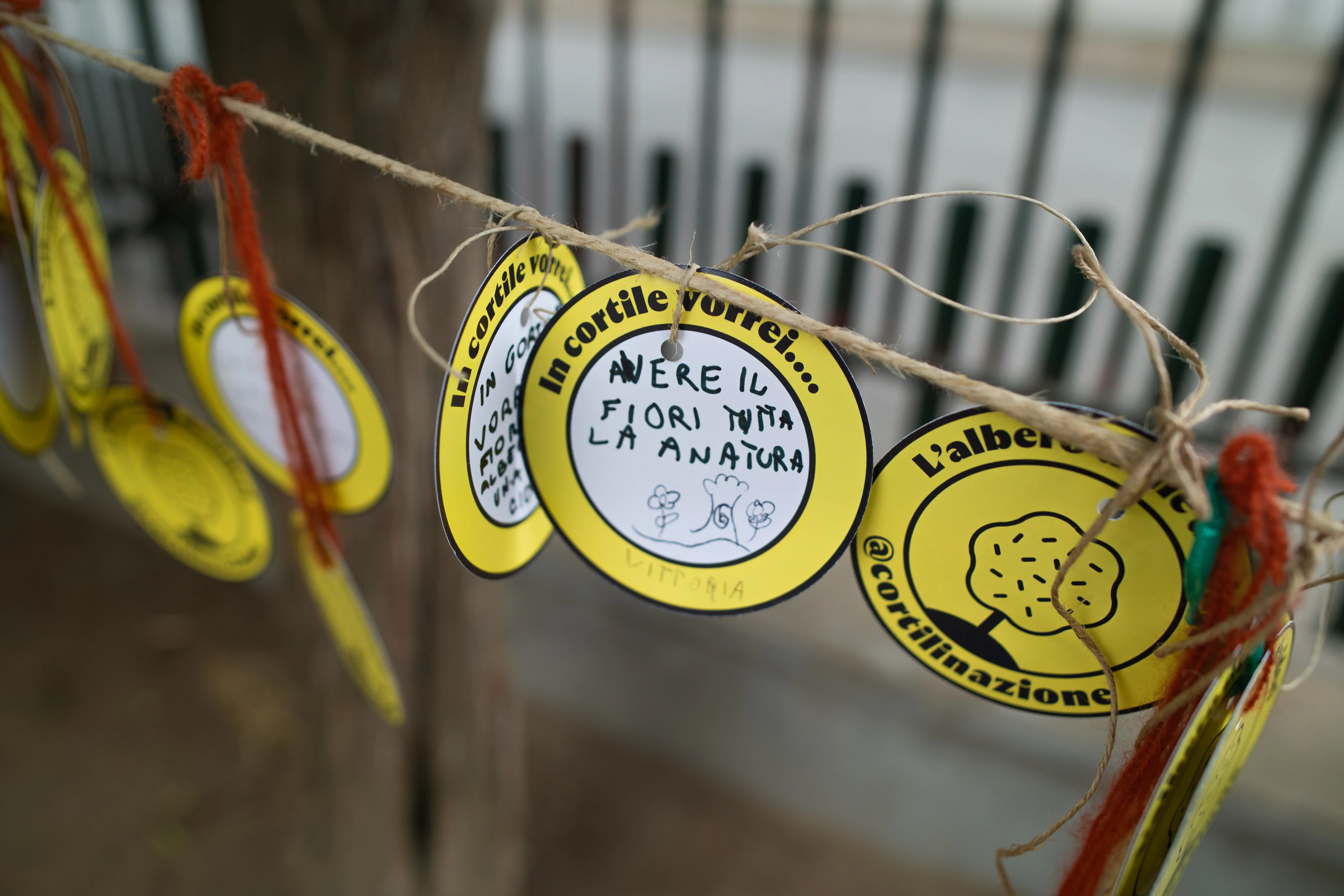
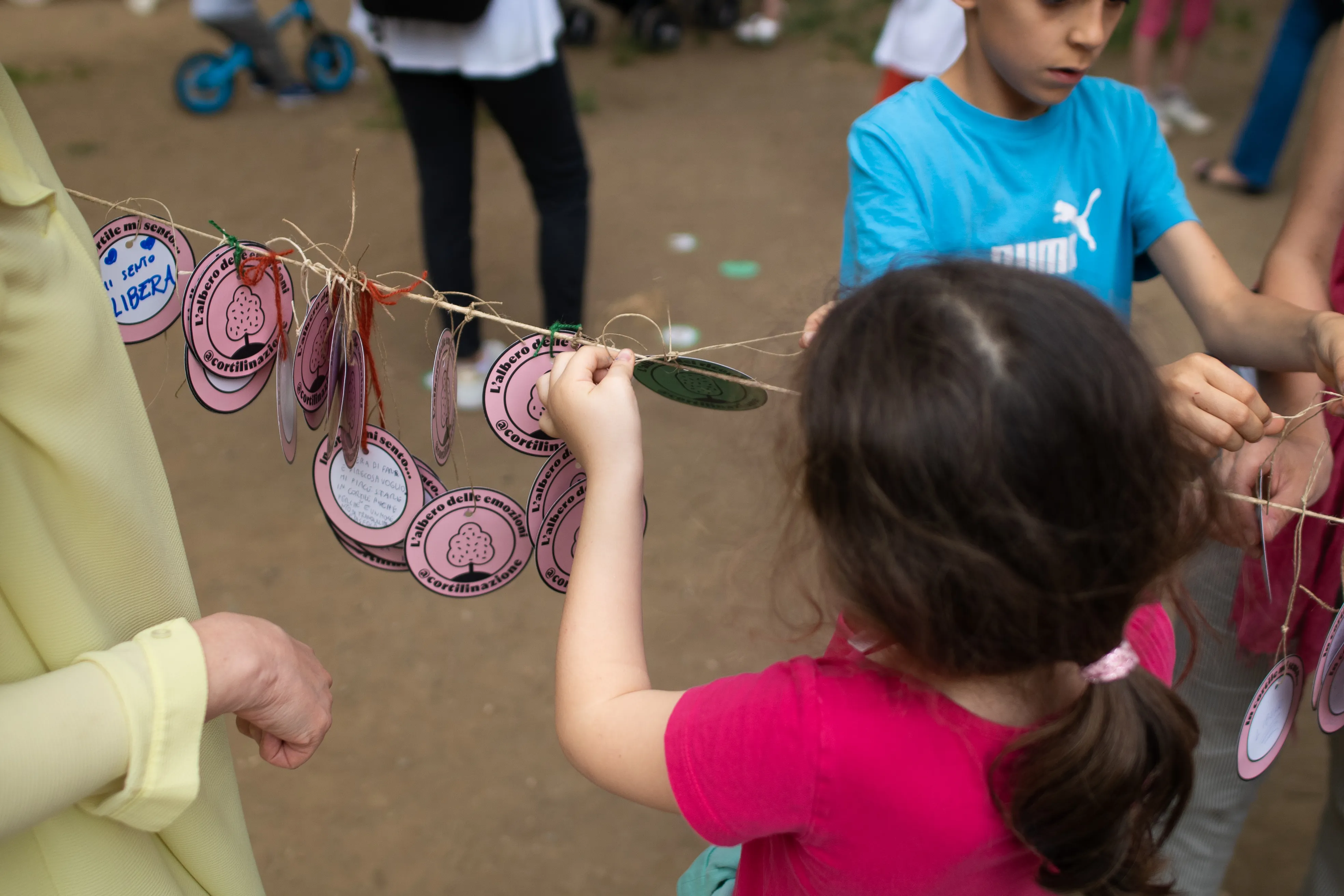
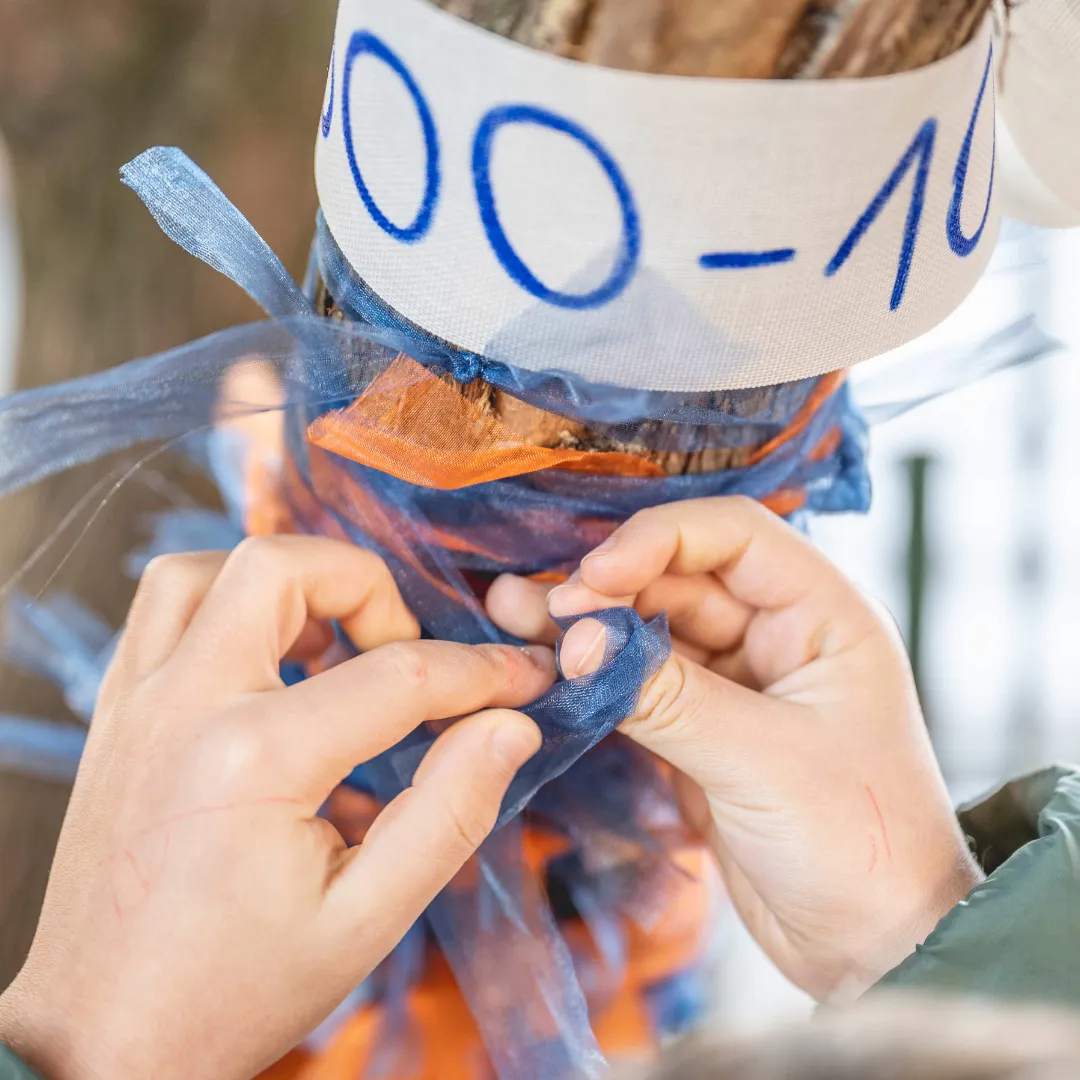
During Dillo all'Albero (Tell It to the Tree), three trees collected children's wishes, emotions and memories about their courtyard.
As children attached their contributions, the trees became physical representations of their experiences. Play and enjoyment emerged alongside a desire for more contact with nature, from fruit trees to treehouses and swings.
The project also explored how school courtyards shape children's relationships with nature, drawing on environmental psychology and measures of connectedness to nature and perceived restoration.
The evaluation involved 253 children and 59 school staff members, before the intervention and six months after exposure to the transformed environment.
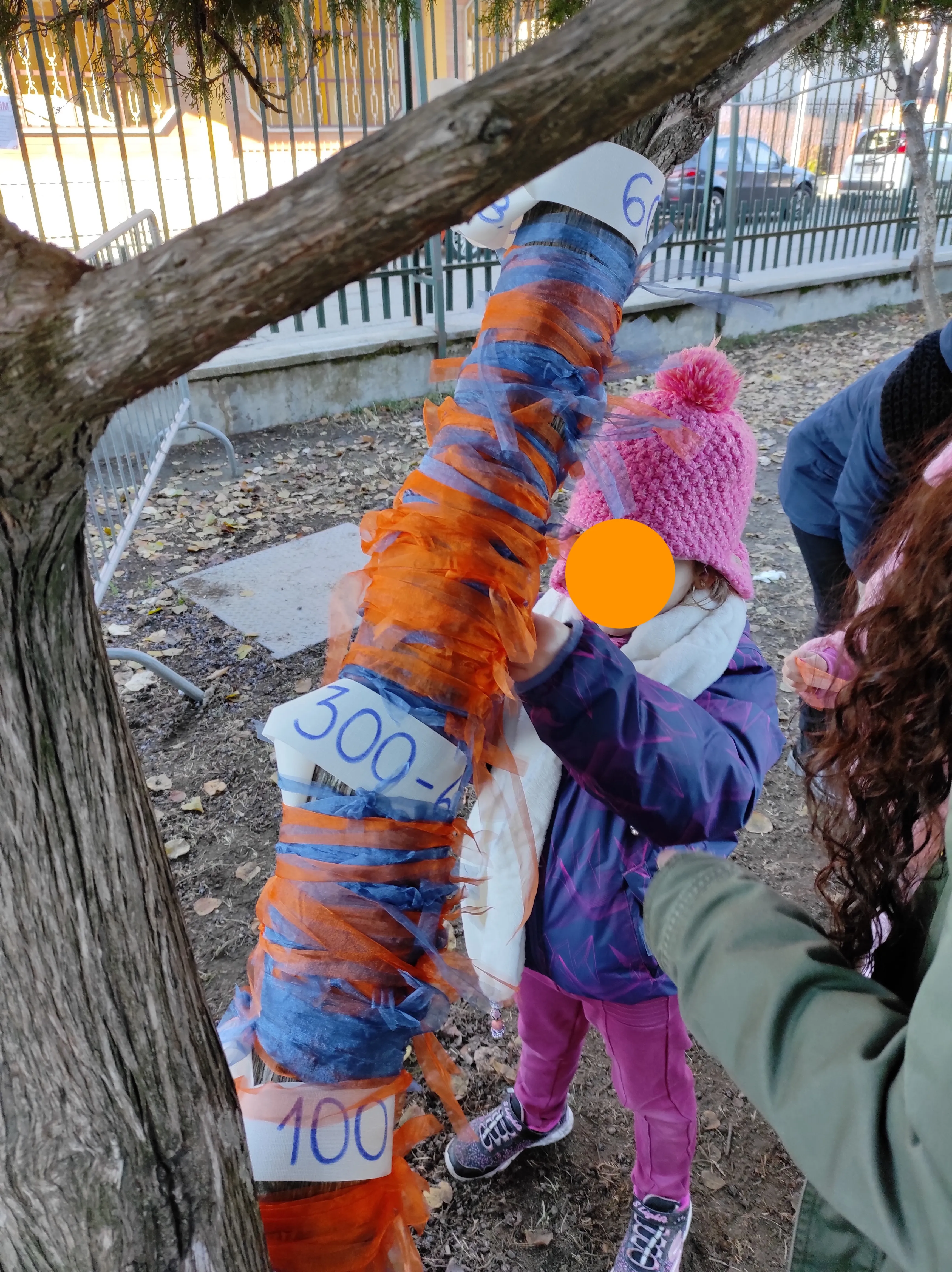
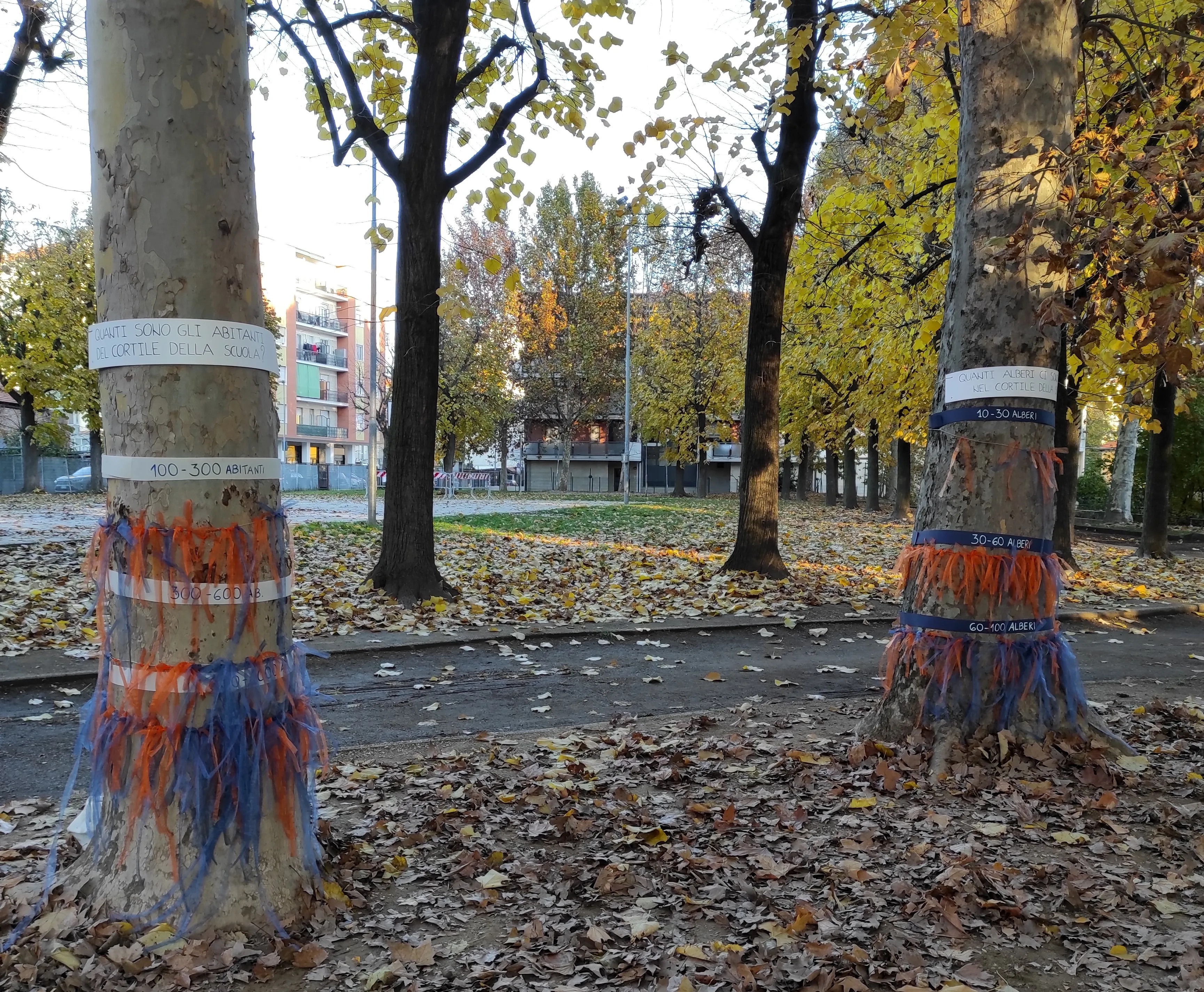
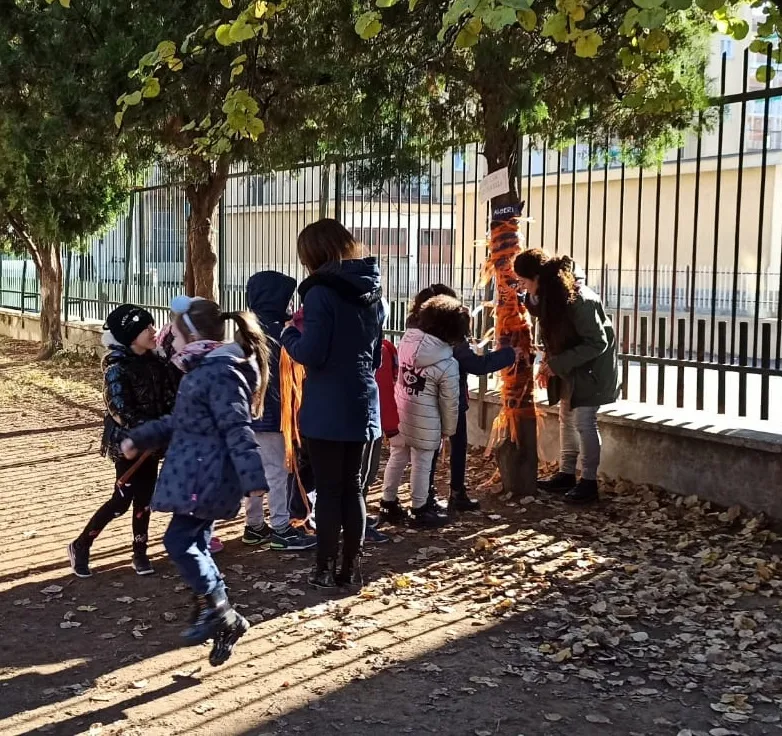
Alongside the research, children and teachers used coloured ties around tree trunks to express their relationship with the courtyard and nature, gradually creating a visible trace of the community's connection with the space.
Cortili in Azione shows how participatory design can connect knowledge, collective reflection and the transformation of shared spaces.
Participatory Data Physicalization made experiences visible, tactical urbanism translated children's ideas into spatial interventions, and environmental psychology helped investigate relationships with nature.
Participation does not mean everyone has equal influence over design. But it can create a framework in which people's situated knowledge becomes visible and available for discussion.
Here, data were not simply collected about a community. They were produced through the community's participation, in the spaces being transformed.
Follow us on
Instagram
LinkedIn
Spotify
Medium